Why the 2026 Concluding Observations on Cameroon must become a national accountability and reform agenda
By PaWED-IATC INSIGHTS | November 2026
Introduction: Beyond international scrutiny, towards national accountability
Cameroon stands at a critical human rights crossroads.
On 4 November 2026, the United Nations Human Rights Committee adopted its concluding observations on Cameroon’s sixth periodic report under the International Covenant on Civil and Political Rights (ICCPR). The observations, dated 6 November 2026, offer a sobering assessment of the country’s human rights situation, acknowledging some legislative and institutional progress while identifying persistent structural weaknesses that undermine the effective enjoyment of fundamental rights and freedoms.
The Committee’s assessment is particularly significant because it goes beyond identifying isolated human rights violations. It exposes the interconnected nature of institutional accountability, gender inequality, insecurity, discrimination, restricted civic space, access to justice and democratic governance.
For Cameroon, this is more than another international human rights review. It is an opportunity to confront the structural conditions that allow violations to persist, strengthen national accountability mechanisms and translate international commitments into tangible improvements in people’s lives.
For women and girls, children, internally displaced persons, Indigenous populations, persons with disabilities, journalists, human rights defenders and communities affected by insecurity, the central question remains: when will the rights guaranteed in national laws and international instruments become rights that people can actually exercise?
At PaWED-IATC, we consider these concluding observations an important framework for renewed national dialogue, evidence-based advocacy and coordinated civil society engagement.
1. The implementation deficit: When policy commitments fail to translate into rights
The Committee recognises several positive developments in Cameroon’s legislative and institutional framework.
These include the 2024 legislation on civil registration and personal data protection, the decentralisation framework, the promotion of official languages, and the strengthened mandate of the Cameroon Human Rights Commission.
The Committee also acknowledges important policy initiatives addressing gender-based violence, including:
- The National Strategy to Combat Gender-Based Violence (2022–2026).
- The National Action Plan for the Elimination of Female Genital Mutilation (2022–2026).
- The Second National Action Plan for the implementation of United Nations Security Council Resolution 1325 and related resolutions (2023–2027).
However, the Committee’s observations expose a recurring problem, the existence of laws, strategies and institutional mechanisms does not automatically guarantee their implementation.
The persistence of discrimination, inadequate investigations, weak accountability, limited access to remedies and insufficient protection of victims points to a significant implementation deficit.
This raises the important governance question of how can Cameroon demonstrate measurable progress when institutional commitments are not consistently translated into accessible services, effective enforcement and justice for victims?
The challenge is therefore not simply to adopt more policies. It is to strengthen implementation, allocate adequate resources, establish measurable indicators, publish disaggregated data and ensure that institutions are held accountable for results.
A policy commitment without implementation is an unfulfilled human rights obligation.
2. Gender equality: The unfinished business of legal and structural reform
One of the most consequential aspects of the Committee’s observations concerns the persistence of discriminatory laws and practices affecting women and girls.
Although the Committee acknowledges progress in women’s parliamentary representation and measures to promote their land and inheritance rights, it remains concerned about discriminatory provisions in the Civil Code, polygamy, unequal minimum marriage ages and customary practices that undermine women’s property and inheritance rights.
Its recommendations are particularly important.
The Committee calls on Cameroon to:
- Ensure that the proposed Family Code complies with the Covenant and removes discriminatory provisions concerning the rights of spouses and matrimonial property.
- Address discriminatory provisions relating to polygamy.
- Establish 18 years as the minimum age of marriage for both girls and boys.
- Guarantee equal land and inheritance rights and effective remedies against dispossession.
- Increase women’s representation in local and regional decision-making through appropriate temporary special measures.
These recommendations expose the limitations of approaching gender equality exclusively through awareness campaigns or women’s empowerment programmes.
Women’s economic empowerment cannot be sustainable where women lack secure land rights, inheritance rights, equal status within marriage and meaningful participation in decision-making.
The proposed Family Code is therefore not merely a technical legislative exercise. It represents an important opportunity to address structural gender inequalities embedded in family relations, property ownership and customary practices.
The challenge is to ensure that constitutional guarantees of equality are reflected in statutory law, customary justice systems and everyday institutional practice.
Gender equality requires more than representation. It requires equal rights, equal protection, equal opportunities and equal power.
3. Gender-based violence: Cameroon can no longer postpone comprehensive legal protection
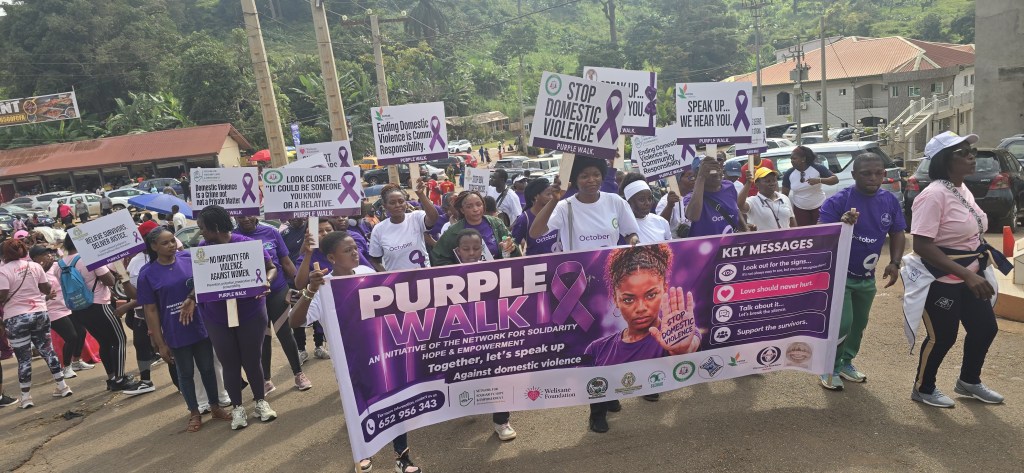
Perhaps one of the strongest messages in the concluding observations concerns the continued absence of comprehensive legislation addressing violence against women.
The Committee expresses concern that the draft legislation on gender-based violence remains under consideration, while domestic violence and marital rape are not expressly criminalised.
It also highlights reported cases of femicide, female genital mutilation and breast ironing, alongside inadequate information on investigations, prosecutions, convictions and victims’ access to essential services.
The Committee’s recommendations are unequivocal in their direction.
Cameroon should adopt comprehensive legislation prohibiting and punishing all forms of violence against women, including domestic violence and marital rape, while providing effective protection for survivors.
It also calls for:
- Prompt, thorough and impartial investigations into all allegations of violence.
- Express criminalisation of breast ironing.
- Safe and accessible reporting mechanisms.
- Emergency shelters and legal, medical and psychosocial assistance.
- Adequate compensation and other forms of reparation.
- Community-based prevention programmes addressing the root causes of harmful practices.
- Training for relevant professionals and systematic collection of disaggregated data.
These recommendations reinforce the urgency of advancing the proposed GBV legislation from a draft policy document to an enforceable national law.
For PaWED-IATC, this is particularly important in light of our engagement in GBV prevention, policy advocacy, service mapping, referral pathway strengthening and efforts to advance comprehensive legal protection for women and children.
The observations also provide an important advocacy reference for engaging Parliament, the Ministry of Women’s Empowerment and the Family, the Ministry of Justice, law enforcement institutions, development partners and civil society.
The 122 Centres for the Promotion of Women and the Family reported by the delegation are important institutional assets. However, their existence must translate into accessible, adequately resourced and survivor-centred services.
The measure of a country’s commitment to ending gender-based violence is not the number of policies adopted, but whether survivors can report violence safely, obtain protection, access justice and rebuild their lives.
4. Sexual and reproductive health and rights: A question of life, dignity and equality
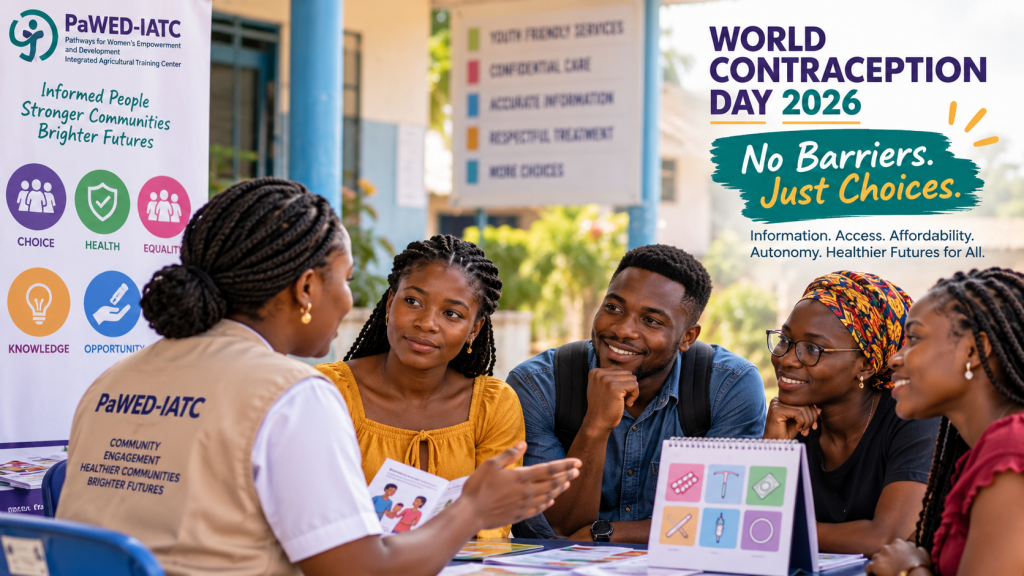
The Committee’s observations on abortion restrictions and access to sexual and reproductive health services deserve particular attention.
It expresses concern about restrictions under Articles 337 and 339 of the Penal Code, including the absence of express exceptions in cases of incest and non-viable pregnancies, as well as the requirement for prior certification by the public prosecutor in cases of rape.
It also highlights the risks of unsafe abortions and the lack of clarity concerning access to urgent and post-abortion care, particularly for adolescent girls and women in rural and remote communities.
Its recommendations include:
- Revising the Penal Code to ensure access to legal and safe abortion when the life or physical or mental health of a woman or girl is at risk, or where continuation of pregnancy would cause considerable suffering, including in cases of rape, incest or non-viable pregnancy.
- Removing criminal penalties for women and girls who undergo abortions and health professionals who assist them.
- Removing the requirement for prior prosecutorial certification in cases of rape.
- Ensuring rapid, confidential and age-appropriate access to safe and legal abortion for girls and adolescents who are survivors of rape or incest.
- Guaranteeing emergency medical care and confidential post-abortion services.
- Improving access to reliable information, age-appropriate sexuality education, contraception and quality reproductive health services, including in rural and remote areas.
Importantly, the Committee frames these issues within the right to life, health and freedom from cruel, inhuman or degrading treatment.
This is a critical shift in the national conversation.
Sexual and reproductive health and rights cannot be reduced to morality debates or individual choices divorced from public health, human dignity and state obligations.
For adolescent girls, survivors of sexual violence, women living in conflict-affected communities and those facing poverty and geographical exclusion, access to reproductive health information and services can determine whether they live with dignity or face preventable harm.
The observations provide an important basis for renewed engagement on the intersection between the Penal Code, public health policy, gender equality and Cameroon’s international human rights obligations.
Reproductive justice is inseparable from the right to life, bodily autonomy, wellbeing, equality and dignity.
5. Conflict, militarisation and the gendered consequences of insecurity
The Committee’s examination of the security situation is particularly significant for communities affected by the Anglophone crisis and insecurity in the Far North.
It identifies serious violations attributed to non-state armed groups and alleged violations attributed to state security forces, including killings, abductions, torture, arbitrary detention, enforced disappearances and sexual violence.
It also highlights the vulnerability of displaced persons and refugees, particularly women, children and persons with disabilities.
For women and girls, conflict creates multiple and overlapping risks.
These include sexual and gender-based violence, exploitation, displacement, loss of livelihoods, disrupted education, family separation, restricted mobility and reduced access to sexual and reproductive health services.
The Committee calls for effective investigations into alleged violations by all relevant actors, accountability for perpetrators, protection of civilians, access to humanitarian assistance and safe, voluntary and dignified returns for displaced populations.
It also calls for clarification and independent oversight of vigilance committees participating in counter-terrorism operations.
These recommendations must be understood through the Women, Peace and Security agenda.
UN Security Council Resolution 1325 recognises that women are not merely victims of conflict. They are essential actors in conflict prevention, peacebuilding, mediation, recovery and sustainable security.
Cameroon’s Second National Action Plan on UNSCR 1325 (2023-2027) therefore provides an important national framework for responding to these concerns.
However, its effectiveness must be measured by more than the number of consultations or training sessions conducted.
Are women meaningfully represented in peace and security decision-making? Are women peacebuilders protected? Are survivors of conflict-related sexual violence receiving comprehensive assistance? Are displaced women participating in decisions affecting their return, resettlement and recovery?
These are the questions that should guide implementation.
The Committee’s recommendations also reinforce the importance of investigating violations, ensuring accountability across command structures and guaranteeing effective remedies for victims.
There can be no sustainable peace where civilian protection, women’s security and accountability remain negotiable.
6. Civic space and democratic accountability: Protecting those who defend human rights
Another important dimension of the concluding observations concerns the operating environment for journalists, human rights defenders, civil society organisations and citizens exercising their constitutional freedoms.
The Committee raises concerns about the criminalisation of defamation and the dissemination of false news, the use of cybercrime and counter-terrorism legislation to restrict freedom of expression, threats against journalists and human rights defenders, and restrictions on access to the internet.
It also addresses restrictions on peaceful demonstrations, the registration and operation of associations, and alleged excessive use of force during the October 2025 post-electoral demonstrations.
The Committee calls for a more enabling environment for freedom of expression, peaceful assembly and association.
This is fundamental to democratic governance.
Civil society organisations play an indispensable role in documenting violations, supporting survivors, monitoring public institutions, promoting accountability and ensuring that the experiences of marginalised communities inform public policy.
When human rights defenders operate under intimidation, when journalists cannot report freely and when civil society organisations face disproportionate administrative restrictions, the entire human rights accountability ecosystem is weakened.
For women human rights defenders, the risks may be compounded by gender-based threats, harassment, intimidation and digital violence.
Protecting civic space is therefore not a concession to civil society. It is an essential condition for democratic participation, transparent governance and effective human rights protection.
7. Children, displacement and the right to protection
The Committee’s observations also draw attention to serious protection gaps affecting children. Of particular concern are the verified cases of recruitment and use of 22 children in 2025, including 15 cases attributed to Cameroonian armed forces, as reported in the observations.
The Committee also raises concern about the detention of children suspected of association with armed groups and calls for their treatment primarily as victims requiring protection, rehabilitation and reintegration.
It further highlights violence against children, child marriage and the difficulties experienced by displaced, refugee and rural children in obtaining birth certificates.
According to reports cited by the Committee, more than one million pupils were still without birth certificates at the beginning of the 2025-2026 school year.
This is not merely an administrative problem.
Birth registration is a gateway to legal identity and access to fundamental rights, including education, social protection and other public services.
Children without legal identity are at heightened risk of exclusion and exploitation.
The recommendations to strengthen birth registration, prevent child marriage, protect children associated with armed groups and ensure psychosocial support and family reunification should therefore be integrated into broader child protection, education and peacebuilding interventions.
8. Indigenous peoples, environmental justice and inclusive governance
The Committee also addresses the rights of Indigenous peoples, particularly the Baka and Mbororo communities.
It expresses concern about their marginalisation, inadequate protection of traditional lands and resources, insufficient participation in decisions affecting their territories and limited political representation.
It recommends a comprehensive legal framework recognising and protecting their collective rights, including rights to lands, territories and resources traditionally owned, occupied or used.
It further calls for free, prior and informed consent before the approval of mining, agro-industrial, forestry and conservation projects affecting these communities.
This is an important recognition of the intersection between human rights, environmental governance, climate justice and inclusive development.
For Indigenous women, these challenges may be compounded by gender inequality, poverty, limited access to services and exclusion from decision-making.
A gender-responsive approach to environmental and climate governance must therefore ensure that Indigenous women are not only consulted but are able to influence decisions concerning their livelihoods, natural resources and communities.
Sustainable development cannot be achieved at the expense of the rights and dignity of the communities whose territories sustain it.
9. From recommendations to action: What should Cameroon and its partners do next?
The concluding observations should not remain another document circulated among government institutions and development partners before being forgotten.
They should become a practical accountability and reform framework.
We propose six priority areas for action.
1. Accelerate legislative reforms.
Prioritise the adoption of comprehensive GBV legislation, the reform of discriminatory family and civil laws, stronger protection against discrimination, and reforms addressing the Committee’s concerns about reproductive health and access to justice.
2. Strengthen institutional accountability.
Ensure independent investigations, effective prosecutions, adequate reparations and transparent reporting. Strengthen the independence of the Cameroon Human Rights Commission, the judiciary and relevant oversight institutions.
3. Invest in survivor-centred protection systems.
Expand accessible GBV services, emergency shelters, legal aid, medical care, psychosocial support and referral pathways, particularly in rural, remote and conflict-affected communities.
4. Strengthen women’s participation in governance and peacebuilding.
Move beyond numerical representation towards meaningful participation in local and regional decision-making, peace processes, security governance and public resource allocation.
5. Protect civic space and strengthen civil society participation.
Guarantee an enabling environment for human rights defenders, journalists, women’s rights organisations and community-based organisations to conduct independent monitoring, advocacy and service delivery.
6. Establish a coordinated monitoring and accountability mechanism.
Develop a national implementation matrix identifying each recommendation, the responsible institution, measurable indicators, implementation timelines, budget requirements and verification mechanisms.
Civil society should be actively involved in monitoring progress, producing independent evidence and submitting alternative reports.
10. The role of development partners: Human rights must inform development financing
The Committee’s observations also have important implications for development cooperation and international financing.
Development partners, including multilateral development banks, bilateral donors and UN agencies, should ensure that their programmes contribute to strengthening institutional accountability, gender equality, social inclusion and access to justice.
This requires moving beyond mainstreaming gender as a cross-cutting theme in project documents.
It means financing concrete interventions that address structural barriers, strengthen protection systems, improve women’s economic rights, support survivors and expand access to essential services.
In conflict-affected and fragile settings, development investments must also account for risks of gender-based violence, sexual exploitation and abuse, exclusion and insecurity.
Human rights due diligence, gender-responsive budgeting, meaningful community participation, accessible grievance mechanisms and effective monitoring should be integral to development programming.
The Committee’s findings offer an important reference point for aligning national development priorities with international human rights obligations.
11. A strategic opportunity for civil society: From monitoring to collective action
For Cameroonian civil society, these concluding observations present an opportunity to strengthen coordination and move towards a more systematic approach to human rights monitoring.
Women’s rights organisations, child protection actors, peacebuilding organisations, disability rights groups, Indigenous peoples’ representatives, journalists, legal practitioners and human rights defenders should consider developing a coordinated civil society response.
Such an initiative could include:
- A civil society implementation tracker for the Committee’s recommendations.
- Thematic working groups on gender equality, GBV, SRHR, civic space, access to justice and protection of civilians.
- Periodic monitoring reports documenting progress, setbacks and implementation gaps.
- Strategic engagement with parliamentary committees and relevant government ministries.
- Community consultations to ensure that affected populations inform monitoring and advocacy.
- Evidence-based submissions to the UN Human Rights Committee and other regional and international human rights mechanisms.
The Committee has specifically requested broad consultations with civil society and NGOs during the preparation of Cameroon’s seventh periodic report.
This is an opportunity that civil society should prepare for well in advance.
Conclusion
The real test is implementation
The 2026 concluding observations of the UN Human Rights Committee present Cameroon with a clear message: progress in human rights protection cannot be measured by the number of laws enacted, strategies adopted or institutions established.
It must be measured by whether people are protected from violence, whether women enjoy equal rights, whether children can access education and legal identity, whether civilians are safe, whether victims obtain justice, whether journalists can work without fear and whether citizens can participate freely in public affairs.
The observations also remind us that human rights are interconnected.
Gender equality cannot be achieved without access to justice. Peace cannot be sustained without accountability. Development cannot be inclusive without protecting marginalised communities. Democracy cannot flourish without civic freedoms. And the protection of women and girls cannot be separated from the broader governance and human rights environment.
For Cameroon, the task ahead is therefore not simply to respond to the United Nations Committee. It is to demonstrate, through concrete legislative, institutional, financial and administrative action, that human rights commitments are capable of transforming people’s lives.
At PaWED-IATC, we believe that this moment calls for renewed political commitment, stronger institutional accountability and an empowered civil society working collectively to advance equality, justice, peace and sustainable development.
The question is no longer whether Cameroon has made human rights commitments. The question is whether it is prepared to fulfil them.
Human rights must move from commitments on paper to justice in practice.
About PaWED-IATC
Pathways for Women’s Empowerment and Development-Integrated Agricultural Training Center (PaWED-IATC) is a Cameroonian civil society organisation committed to advancing women’s rights, gender equality, peacebuilding, sustainable development and the empowerment of vulnerable and marginalised communities. Through research, advocacy, capacity development and community engagement, PaWED-IATC works towards a society where women and girls can exercise their rights, participate meaningfully in decision-making and live free from violence and discrimination.
Annex
Proposing a Cameroon Human Rights Accountability Tracker 2027-2029
The UN Human Rights Committee’s Concluding Observations on Cameroon should be more than another set of recommendations on paper. They offer an important opportunity to advance human rights, strengthen accountability and accelerate reforms that improve people’s lives.
To help turn these recommendations into measurable progress, PaWED-IATC proposes a Cameroon Human Rights Accountability Tracker (2027-2029). The tracker will translate the Committee’s priority recommendations into practical actions, measurable indicators, responsible institutions and timelines. It will also provide a framework for civil society organisations, development partners, public institutions and affected communities to monitor implementation, identify gaps and advocate for sustained action.
Our aim is simply to move from commitments to implementation, and from recommendations to tangible change in the lives of women, girls, children and communities across Cameroon.
| Priority area | Key recommendation | Proposed monitoring indicator |
| Gender equality | Reform discriminatory family laws | Family Code adopted and aligned with ICCPR |
| GBV | Adopt comprehensive GBV legislation | Law enacted and implementation budget allocated |
| SRHR | Reform Penal Code provisions | Legislative amendments adopted |
| WPS | Implement NAP 1325 | Women’s meaningful participation and funded activities |
| Access to justice | Strengthen accountability | Disaggregated investigations, prosecutions and reparations data |
| Civic space | Protect human rights defenders and journalists | Documented cases investigated and resolved |
| Child protection | Prevent child recruitment and abuse | Children released, rehabilitated and reintegrated, perpetrators punished accordingly |
| Indigenous rights | Protect traditional lands | Effective consultation and consent processes |
